Tree Inventory
A Resource For HOAs, Developers, Utilities,
Municipalities, Property Managers, & Landowners.
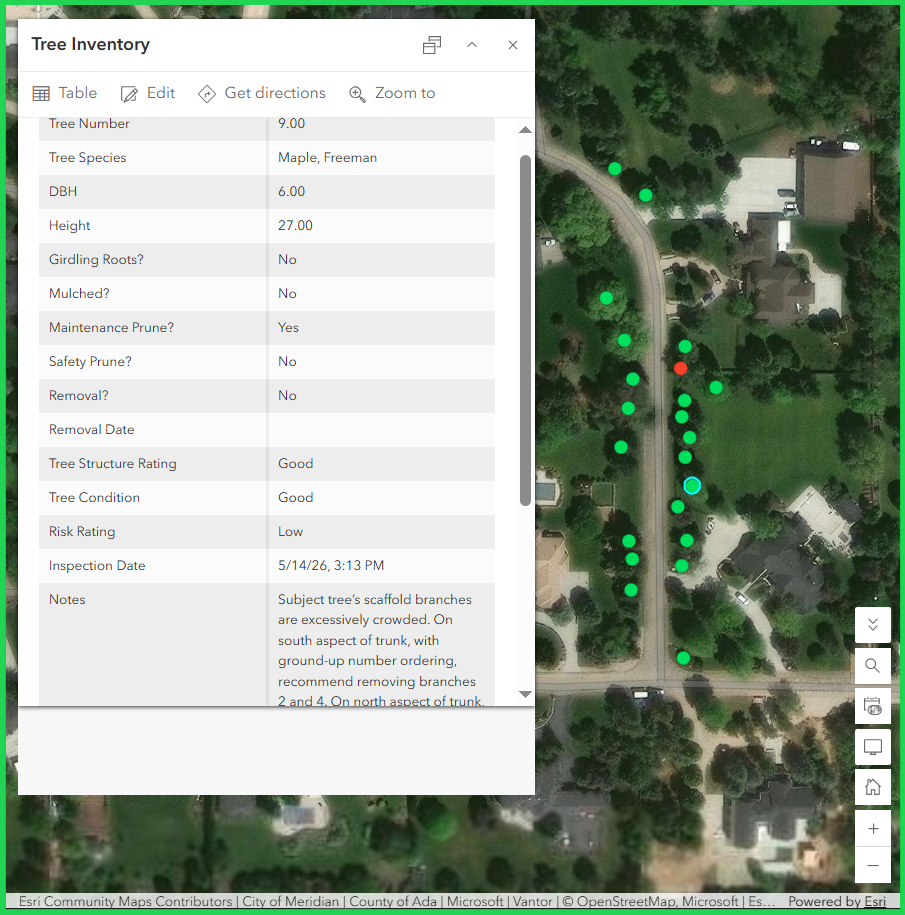
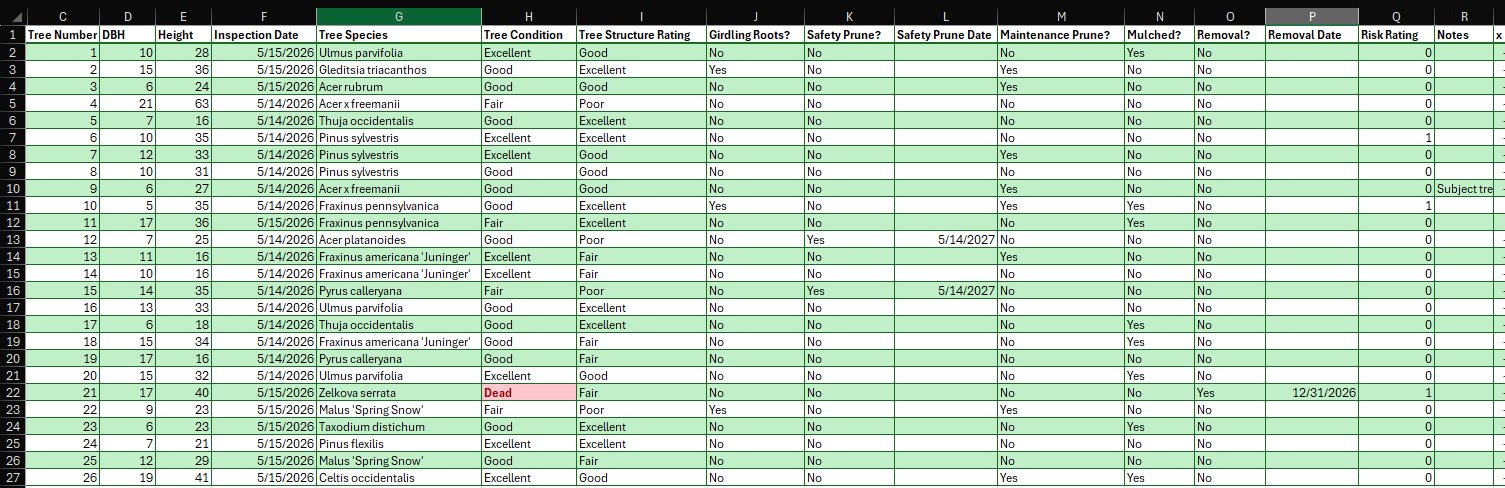
A tree inventory typically includes key data, such as location, species, size, condition (health and/or structural), and basic recommendations (i.e remove, retain, prune, monitor, etc.), depending on project scope. Inventories are a vital part of plant healthcare and risk management, especially for those overseeing large populations of trees. Thorough and regular inventories can streamline planning and budgeting, and may also reduce liability for their owners or managers, by demonstrating an important level of care in their maintenance.
Let’s dive deeper into how this helps.
Facing a variety of pressures—including poor planting practices, poor site compatibility, inadequate maintenance, damage from landscaping activities, and so on—urban trees generally live much shorter lives than their wild counterparts. Homeowners associations (HOAs) are often responsible for the upkeep, and eventual replacement, of hundreds (sometimes thousands) of common-area trees. When mature trees require removal and replacement, costs often exceed $2-3,000 per tree. By conducting thorough, cyclical inventories with the help of a consulting arborist, HOAs can dramatically increase the longevity of their tree populations, while also enhancing their existing beauty and benefits. High-risk trees are identified, and mitigation options are provided. Costs are also saved in the work-planning process; by providing targeted, tree-specific pruning or treatment recommendations, a consulting arborist can streamline the HOA’s bidding efforts to make better use of its budget.
For any manager of tree populations—HOAs, developers, property managers, golf courses, municipalities, etc.—the long-term return on investment is outsized.
How else might an inventory help?
During property development, whenever trees are present, arborist reports are often necessary for Certificates of Appropriateness and/or Certificates of Occupancy. Treasure Valley communities (Boise, Garden City, Meridian, Eagle, Nampa, Kuna, etc.) all have unique permitting requirements, many of which involve ISA Certified Arborists. If you or your firm require this service, schedule a consultation today!
Benefits:
More cost-effective management of health and structural issues (proactive, rather than reactive):
Maintenance/mitigation recommendations simplify your decisions;
As a consultant, not a tree service, the consulting arborist’s recommendations are free of sales bias;
Targeted early-life tree-pruning can prevent the development of major, uncorrectable structural issues (which lead to costly cleanup and/or replacement);
Replanting recommendations are site-specific and maintain species diversity.
Peace of mind—a professional set of eyes has scanned these valuable assets for obvious hazards, demonstrating your commitment to safety.
Expedited project completion (delays aren’t cheap!).